What creates a weld line
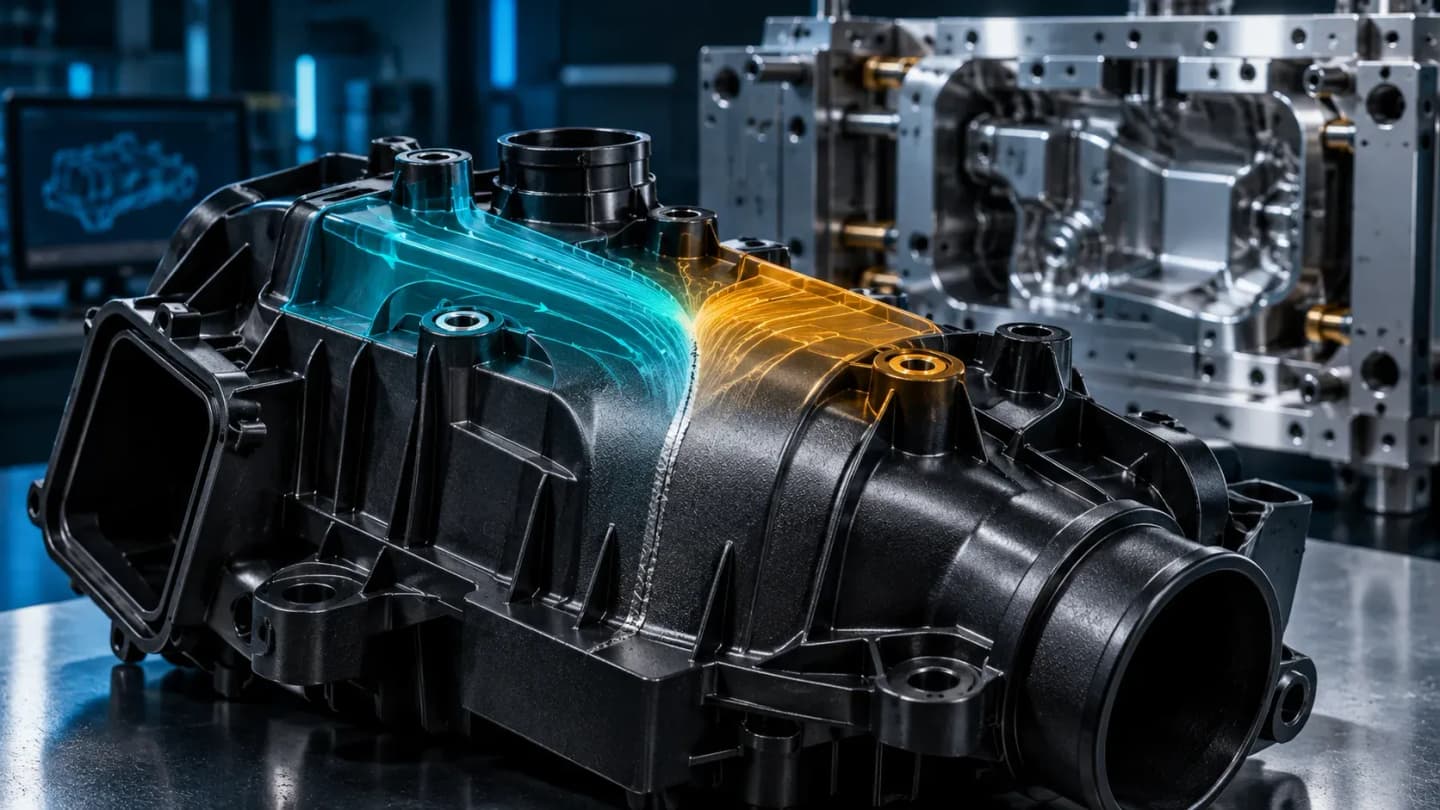
A weld line forms where separate melt fronts meet after flowing around an obstacle, through multiple gates or across a significant thickness transition. The visual mark is only one concern; incomplete molecular bonding can also reduce local strength.
Risk rises when the fronts meet at low temperature or pressure, when air cannot escape, or when reinforcement orientation is unfavourable. The location of the line often matters as much as its appearance.
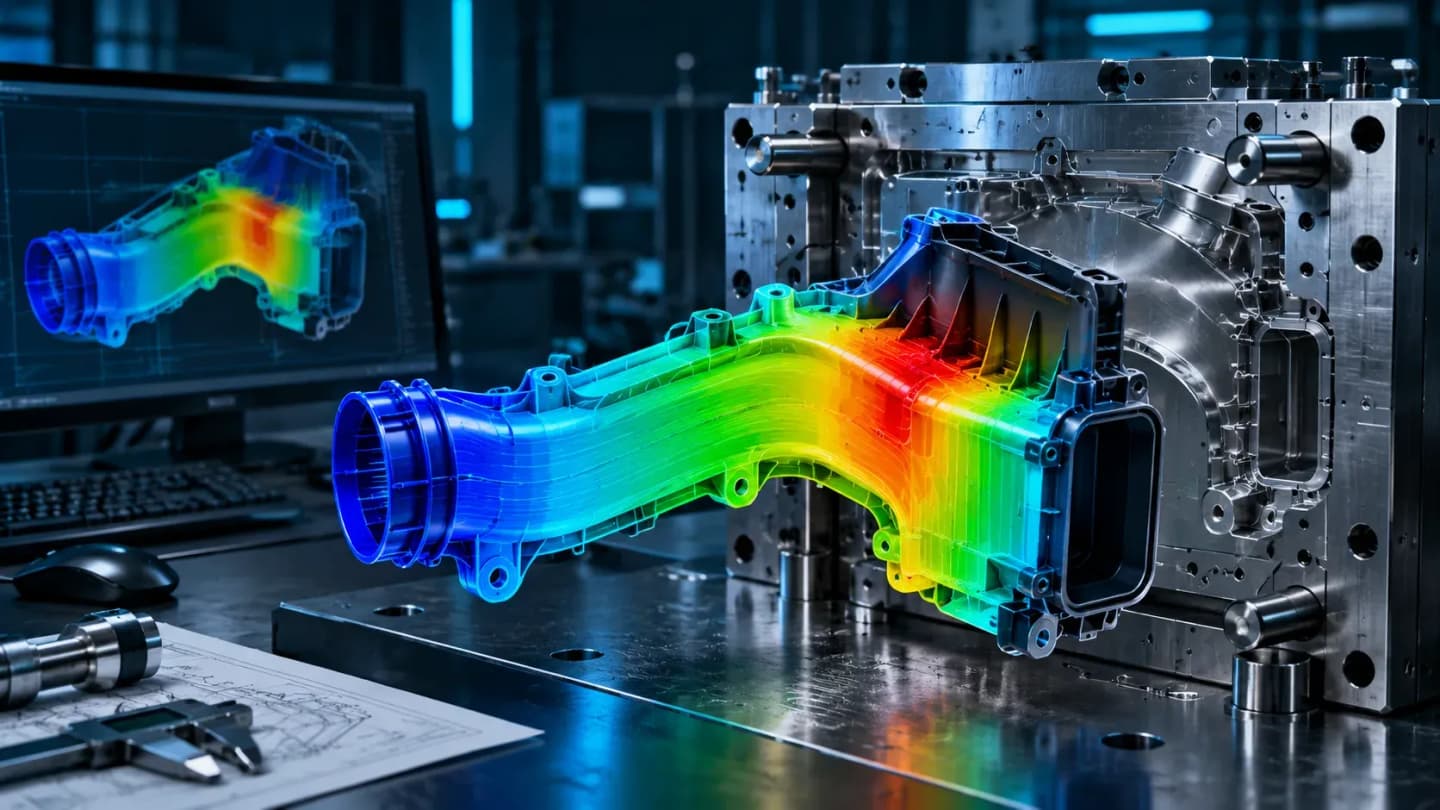
Use simulation as a decision tool
A filling study can predict likely meeting locations and show the temperature, pressure and angle of the fronts. Results should be reviewed alongside gate feasibility, venting, ejection and the functional load case rather than as a colour plot in isolation.
Moving a gate may relocate the line but can create new pressure, appearance or warpage problems. Several concepts should be compared against the same acceptance criteria.
Control the remaining risk
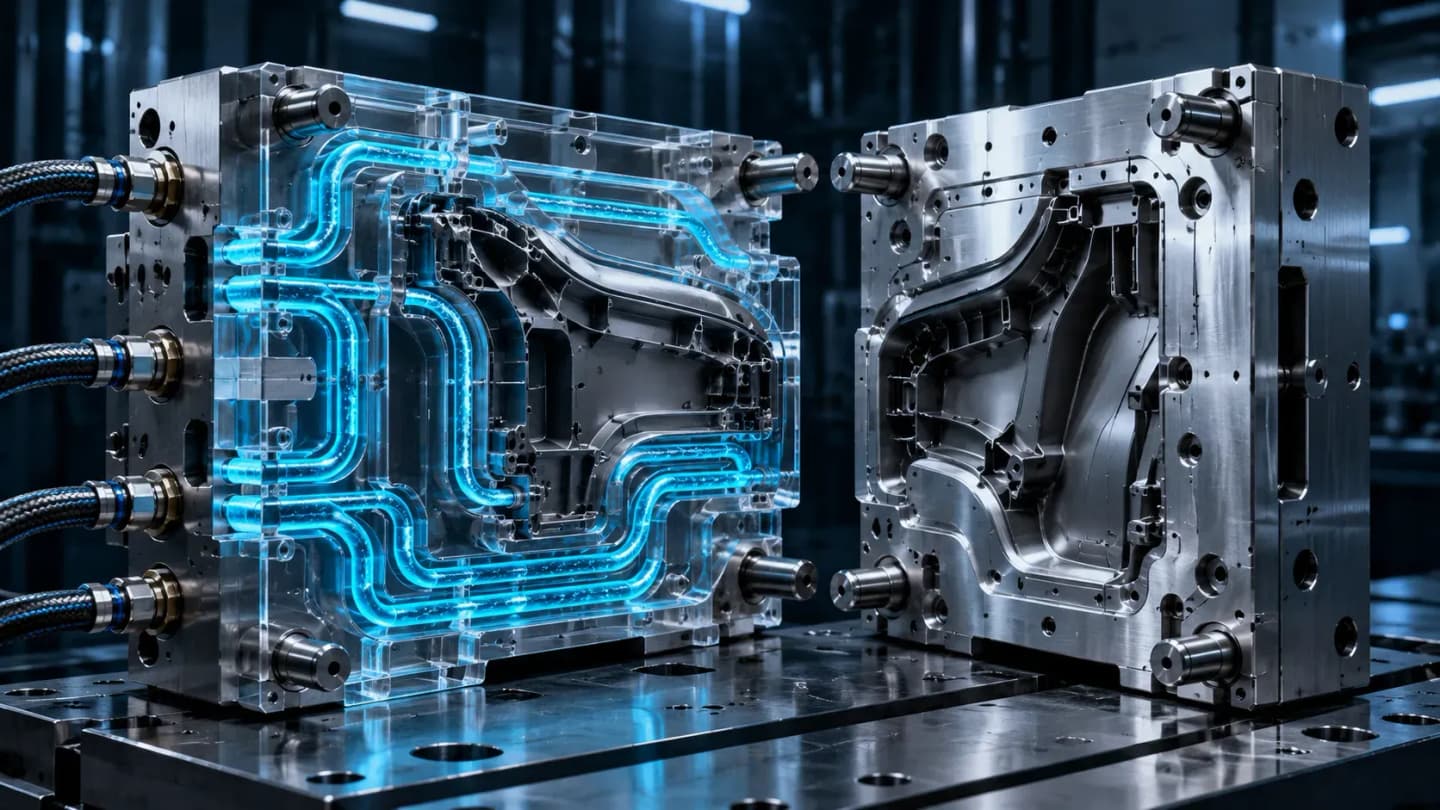
Design changes may include a different gate position, improved flow balance, local geometry refinement or better venting. Process changes can support melt-front temperature and packing, but should not be used to hide a fundamentally weak tool concept.
The final location and quality of the weld line should be confirmed during trials and, where structural performance matters, through representative testing.