Define the question before running the model
Simulation is most useful when it tests a decision: whether the gate concept fills evenly, whether pressure fits the selected machine, where weld lines or air traps may occur, and which regions drive cooling or warpage.
Material data, mesh quality, wall thickness and process assumptions directly affect the result. A polished report cannot compensate for inputs that do not represent the proposed production conditions.
Read results together
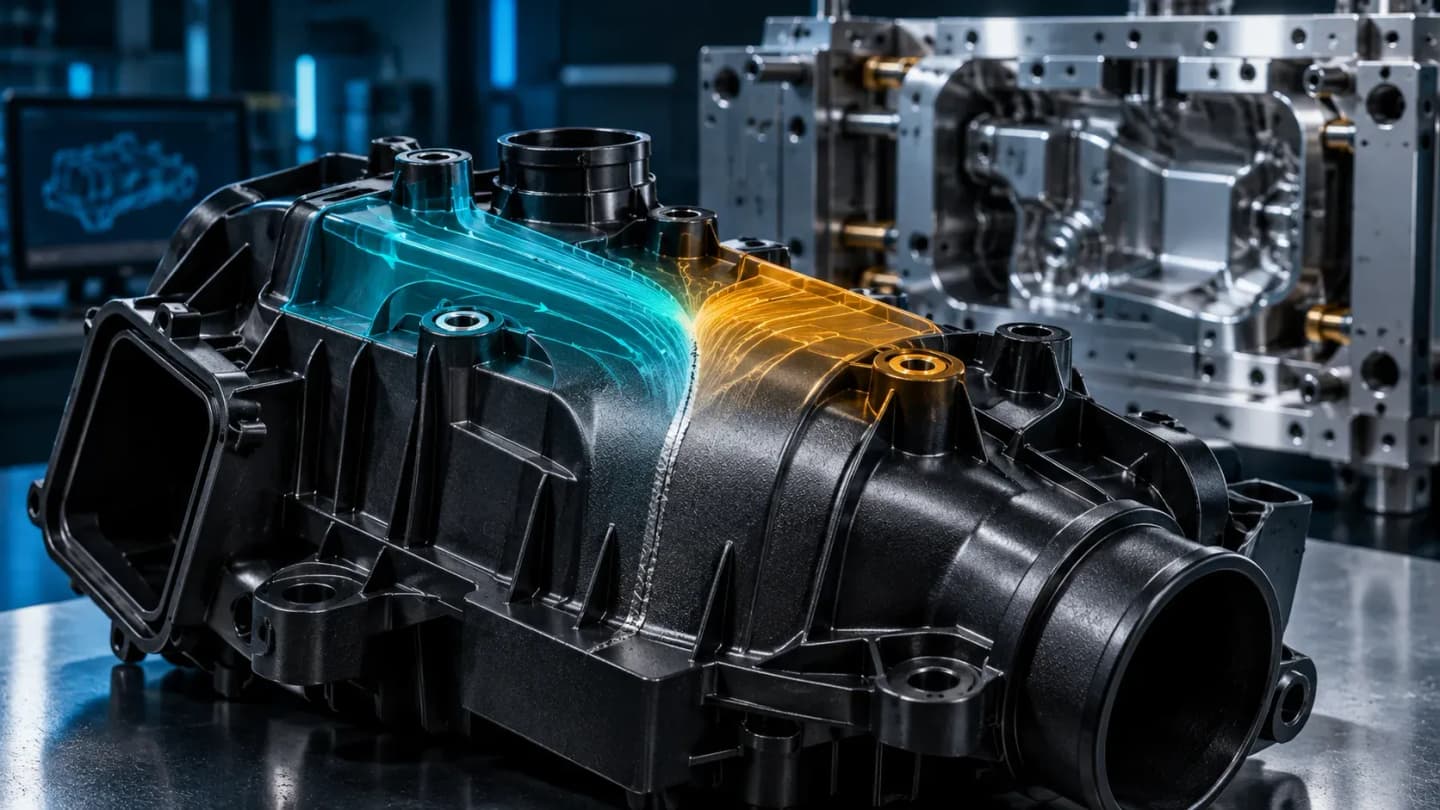
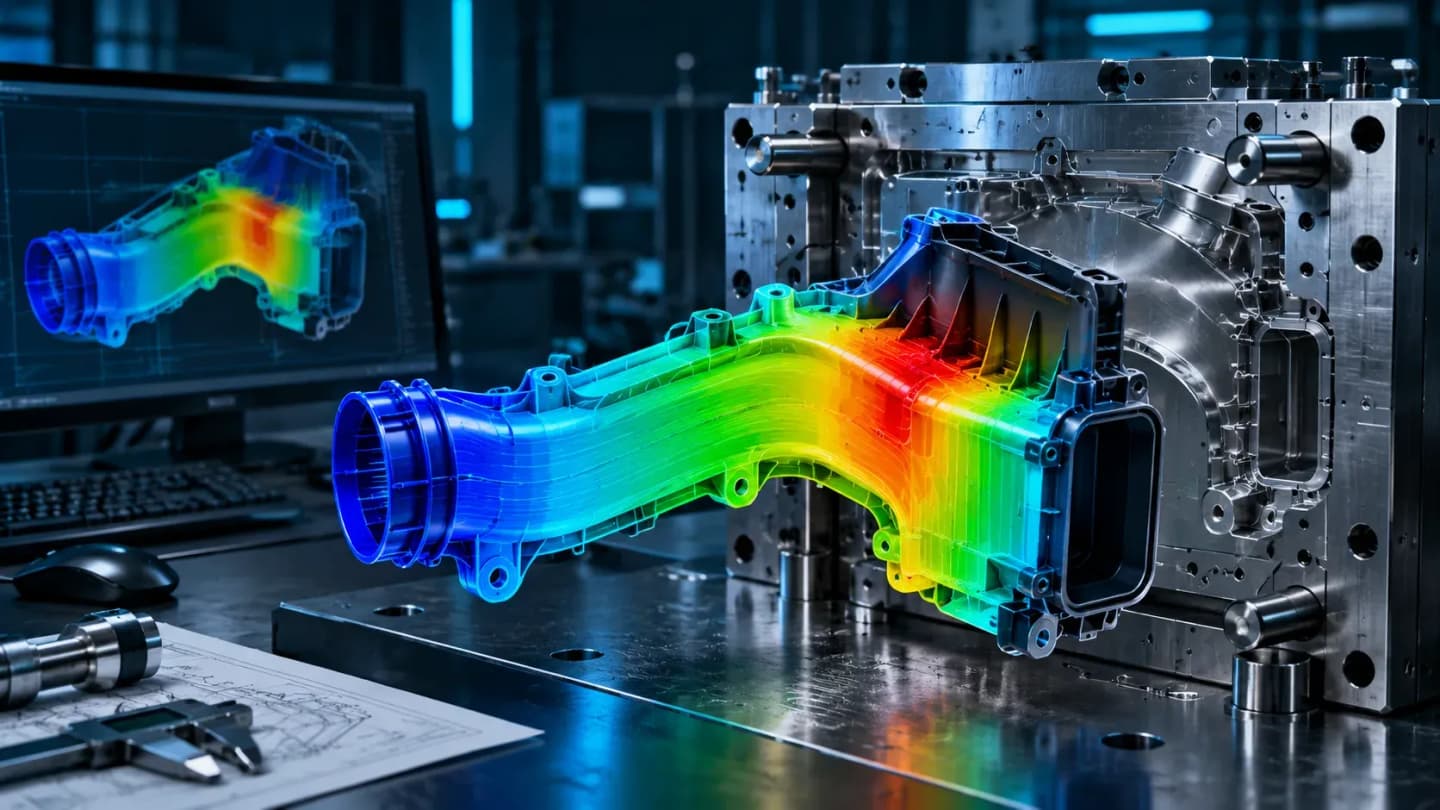
Fill time, pressure, temperature, shear, clamp force and volumetric shrinkage describe different parts of the same process. A design that fills may still demand an unstable pressure window or create uneven packing.
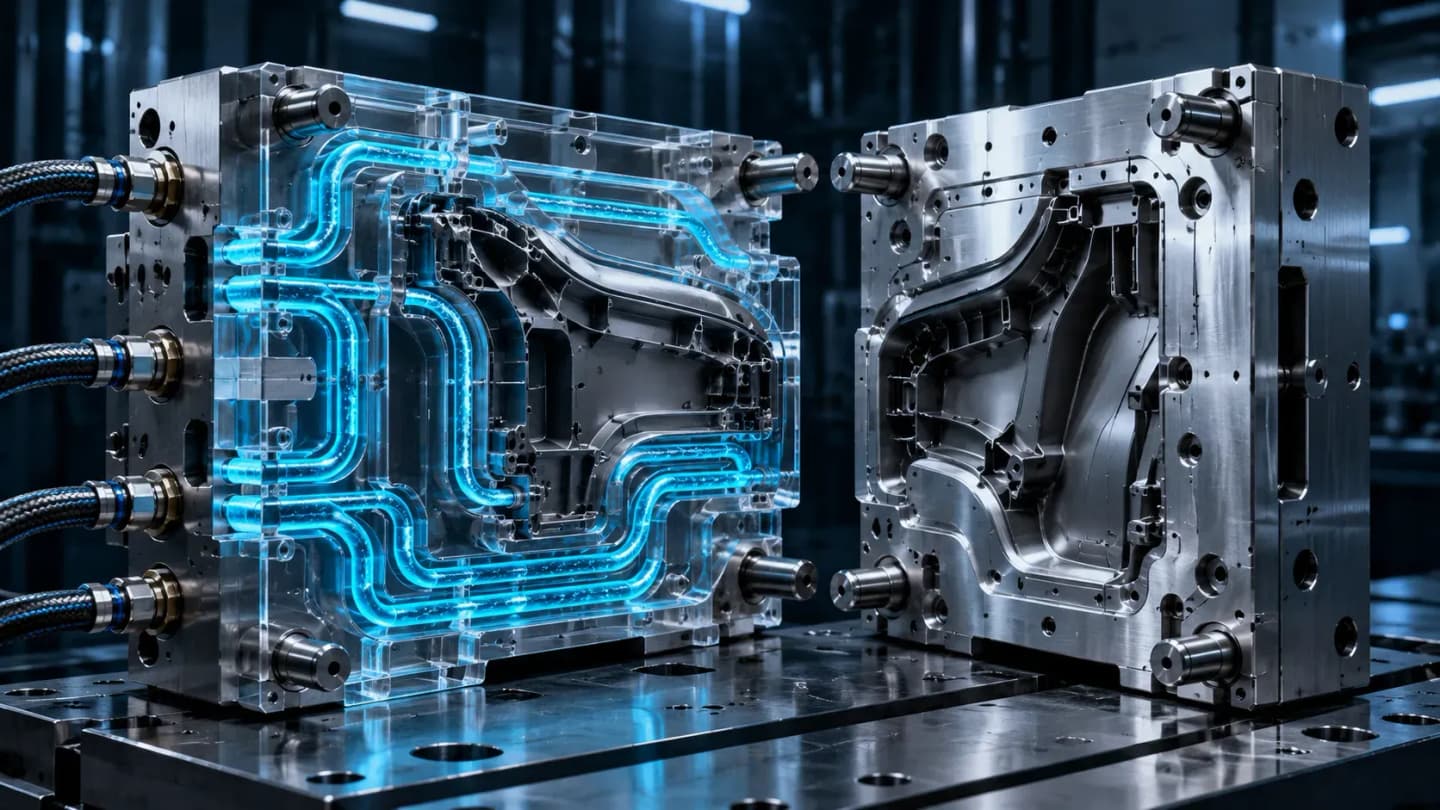
Cooling and warpage results should be linked back to geometry, fibre orientation, tool temperature and constraint. The objective is to understand cause and sensitivity, not to search for one green contour plot.
Carry assumptions into the trial plan
Key simulation assumptions should become measurable trial checks. Gate performance, pressure transfer, balance, part temperature and critical dimensions can then confirm where the model is useful and where the process differs.
That comparison improves both the current correction loop and the quality of future engineering decisions.