Start with the direction of release
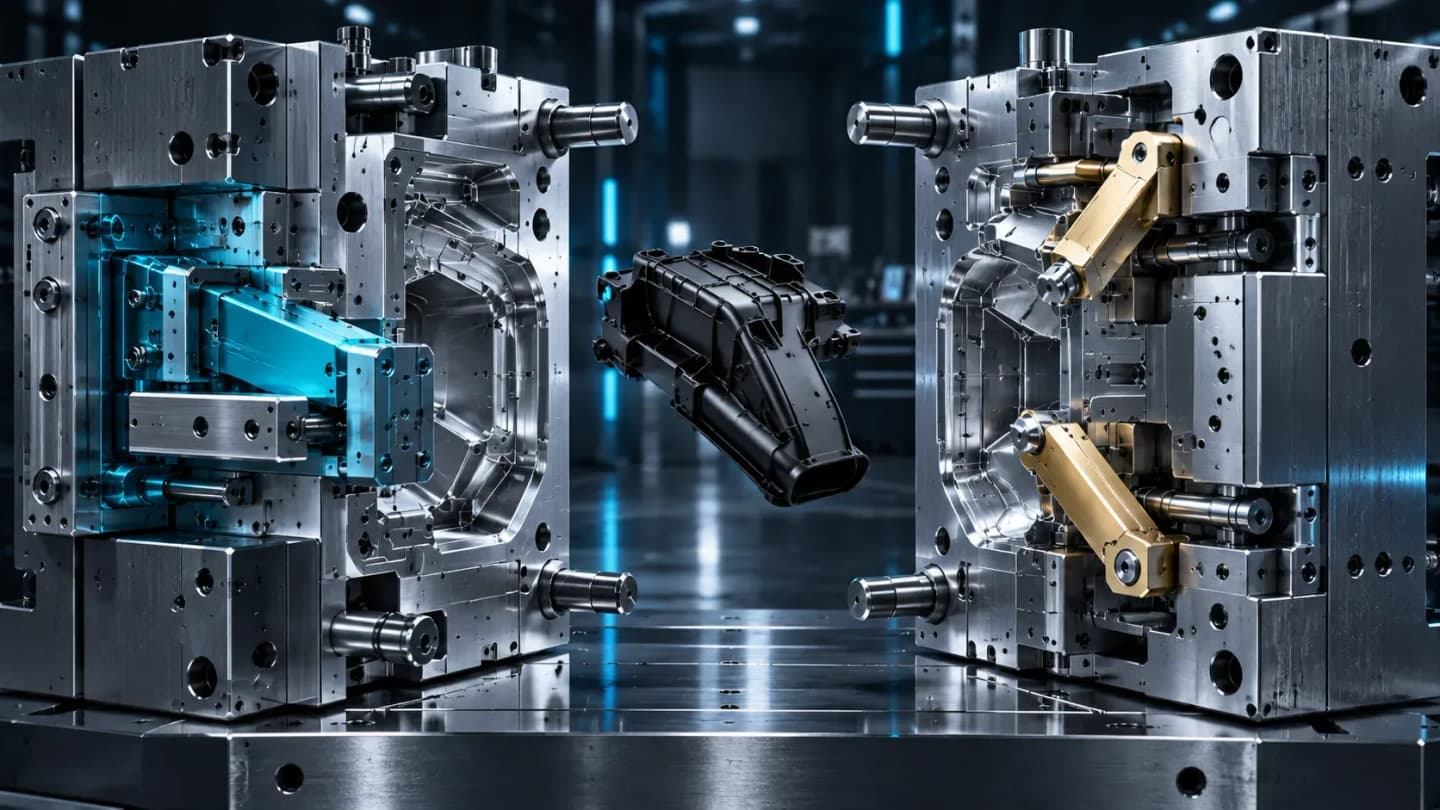
Sliders typically release external side features by travelling laterally as the mould opens. Lifters move at an angle during ejection and are commonly used for internal undercuts where a conventional side action cannot reach.
The correct choice depends on undercut depth, release direction, available stroke, part stiffness, surface requirements and the room available inside the mould base.
Review locking and support
A slider must resist injection pressure without moving away from the cavity. Wedges, heel blocks and guiding surfaces need adequate bearing area, wear allowance and lubrication access. Long unsupported cores require particular attention to deflection.
A lifter must balance release travel with ejection stroke. Its angle, guiding length and contact with the part determine both durability and the risk of drag marks or deformation.
Design for timing and maintenance
Mechanisms should be checked through the complete opening and ejection sequence, including failure cases and manual service access. Positive return, sensing and interlocks may be required where a collision could damage the tool.
Replaceable wear elements, accessible fasteners and clear assembly references reduce maintenance time and make performance easier to restore after service.