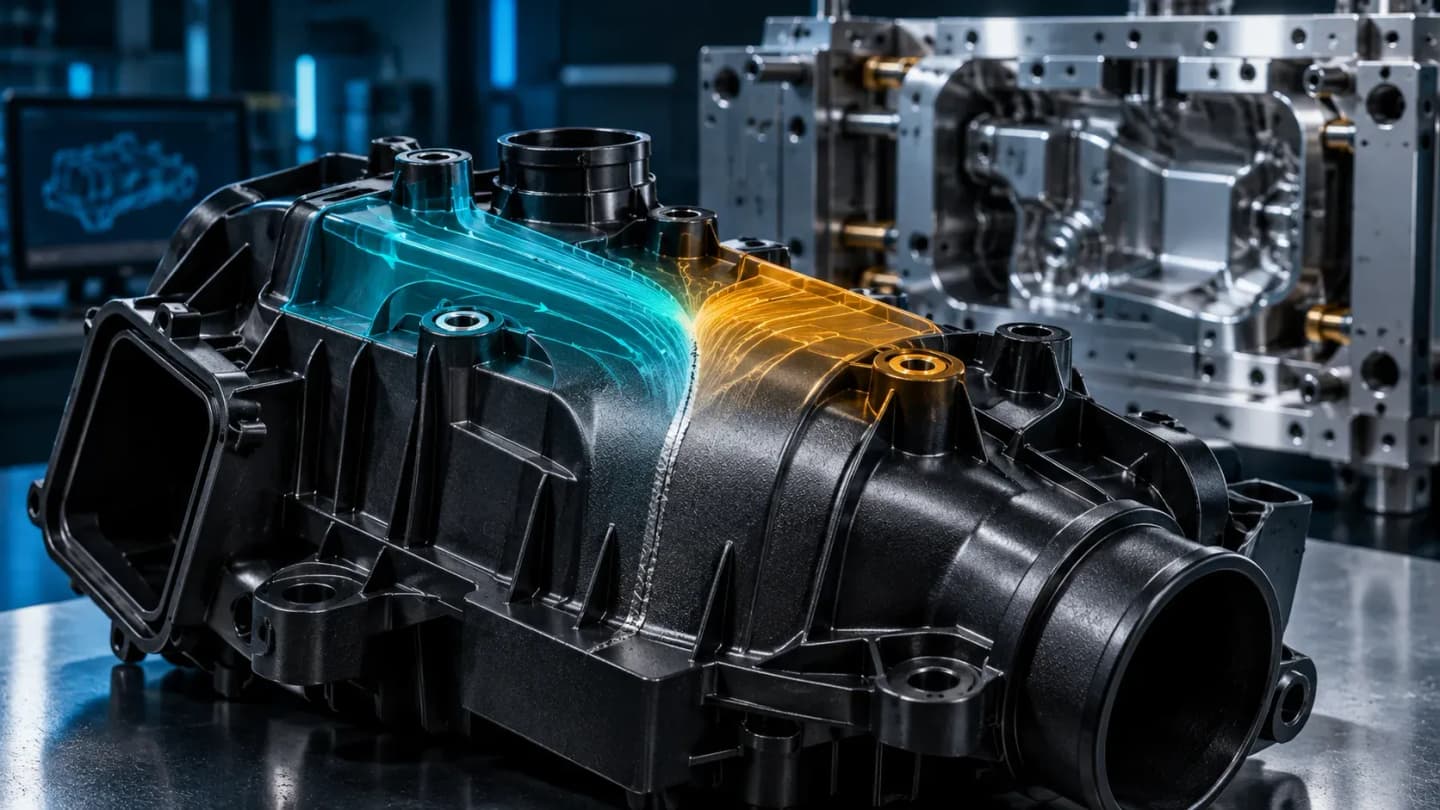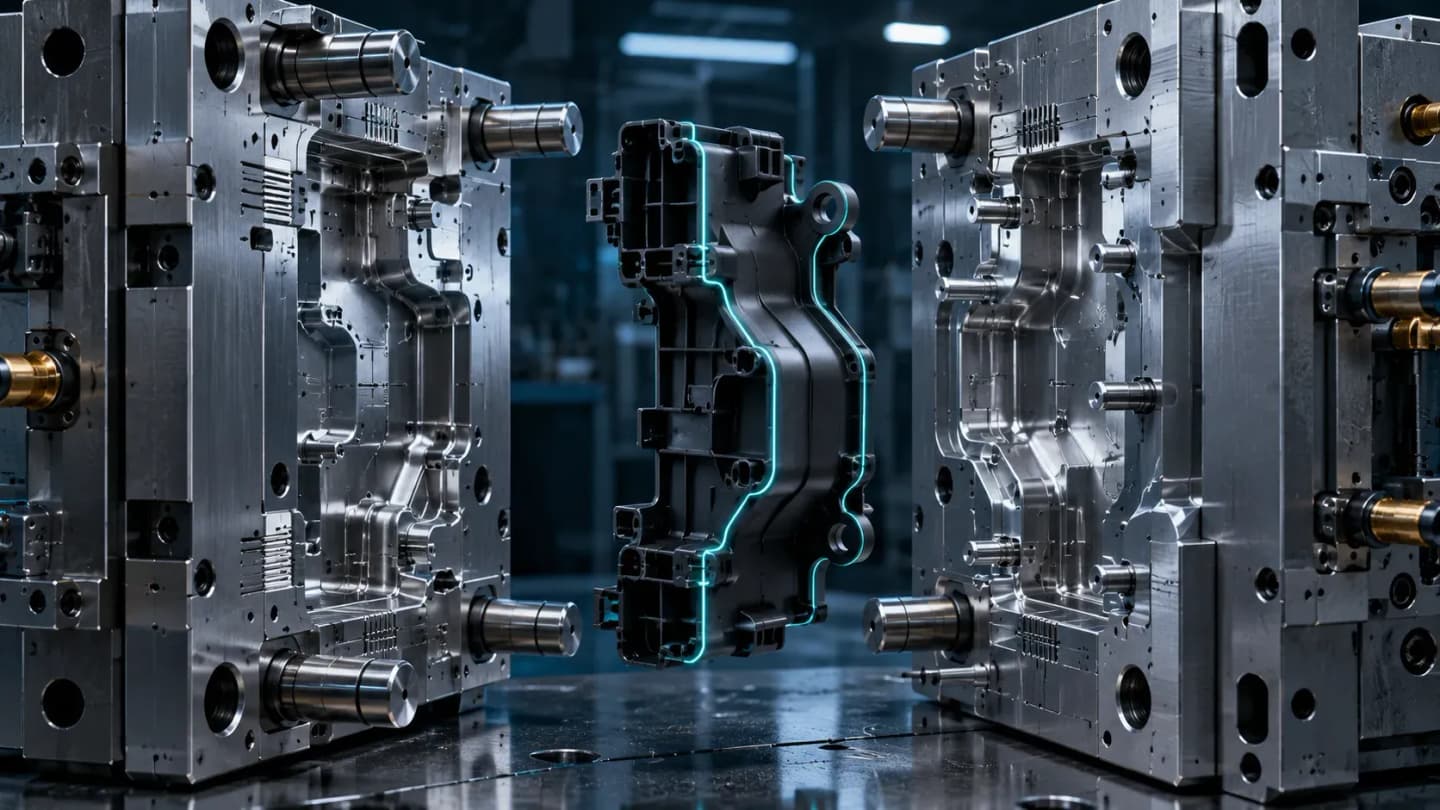
The parting line affects more than appearance
The split between core and cavity determines how the component is retained, where flash may appear and how the tool can be machined, assembled and serviced. It also influences venting, ejection and the feasibility of side actions.
A useful review marks visible surfaces, sealing areas, functional interfaces and locations where even a small mismatch would be unacceptable.
Build robust shut-offs
Shut-off angles need enough bearing length and draft to resist pressure without galling. Thin steel conditions and knife edges should be avoided or made replaceable. Complex stepped parting lines require clear datum and fitting strategies.
Where the parting line crosses textured or cosmetic surfaces, the expected witness line should be agreed before tool manufacture rather than discovered at the first trial.
Plan for production access
Vents, inserts, fasteners and wear areas must remain accessible after the complete tool is assembled. Cleaning and repair routes are part of the design, particularly in areas likely to trap residue or develop flash over time.
The final concept should be reviewed with manufacturing and fitting teams so that CAD intent can be reproduced accurately in steel.